

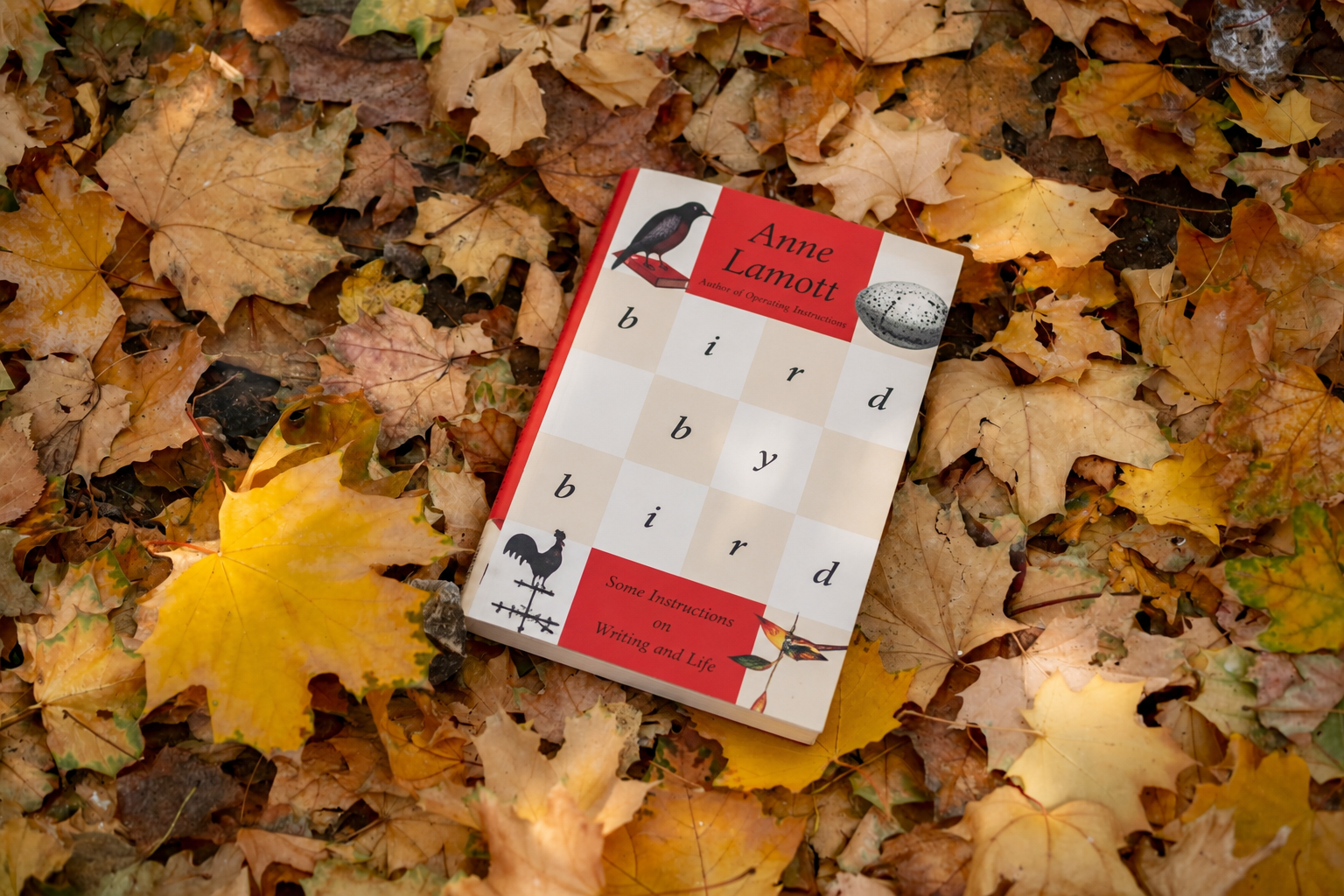
Bird by Bird by Anne Lamott: What This Book Really Teaches About Writing
- September 17, 2026
- by
- Biswajit Mohanty
Writing can look easy from the outside.
You open a document.
You type a few sentences.
Then you keep going.
But anyone who has tried to write seriously knows the truth.
Writing can feel overwhelming.
Sometimes, you have too many ideas.
Sometimes, you have none.
Sometimes, the blank page feels bigger than the project itself.
That is where Bird by Bird by Anne Lamott becomes interesting.
Published in 1994, the book combines writing advice with personal stories. It covers first drafts, writer’s block, character, dialogue, writing habits, and the emotional side of writing.
But I don’t think its biggest lesson is about technique.
Its bigger lesson is much simpler.
Don’t try to write everything at once.
Take it bird by bird.
What Is Bird by Bird About?
Anne Lamott is an American novelist and nonfiction writer.
She wrote Bird by Bird as a book about writing and life.
It isn’t structured like a traditional writing textbook.
You won’t find endless formulas.
You won’t find a rigid writing system.
Instead, Lamott combines practical advice with stories from her own writing life.
That makes the book feel conversational.
It often feels like someone is sitting beside you.
They’re telling you that writing is difficult.
They’re also telling you to keep going.
Penguin Random House describes the book as a modern classic for writers. It has remained popular across multiple editions.
Kirkus Reviews also highlights its practical advice on dialogue, first drafts, observation, and writing habits.
And that’s what makes the book useful.
It talks about writing without pretending writing is easy.
The Story Behind the Title
The title comes from a story about Lamott’s older brother.
He had to prepare a report about birds.
He had delayed the work.
Suddenly, the entire assignment felt enormous.
He didn’t know where to begin.
His father gave him a simple piece of advice.
Take it bird by bird.
That small idea became the central metaphor of the book.
It sounds almost too simple.
But think about how often writers make writing harder.
You don’t think about one article.
You think about fifty articles.
You don’t think about one chapter.
You think about the entire book.
You don’t think about today’s paragraph.
You think about finishing the whole project.
That can create unnecessary pressure.
Sometimes the solution isn’t better motivation.
Sometimes you simply need to make the task smaller.
The First Draft Doesn’t Need to Be Good
This is probably the idea most writers will remember.
Lamott argues that writers should allow themselves to produce terrible first drafts.
That’s an important idea.
Especially if you tend to edit while writing.
You write one sentence.
Then you change it.
You write another.
Then you delete it.
You change the first sentence again.
After an hour, you have almost nothing.
I’ve seen this problem everywhere in writing.
People want the first version to sound finished.
They want every sentence to be polished.
They want the introduction to be perfect.
They want the right word immediately.
That approach can stop the writing process before it begins.
A first draft has a different job.
Its job is to exist.
Editing can come later.
Lamott’s approach to imperfect first drafts is one of the book’s most widely remembered lessons. Penguin Random House and Kirkus both highlight it as a central part of her advice.
This idea also applies beyond creative writing.
It works for blog posts.
It works for newsletters.
It works for essays.
It even works for social media content.
Write first.
Improve later.
Writing Gets Easier When You Make the Task Smaller
This is where the title becomes more than a memorable phrase.
Imagine you need to write a 2,000-word article.
That number can immediately feel heavy.
You might think:
How am I going to write all of this?
Instead, start with one section.
Then another.
Then another.
Don’t worry about the entire article.
Work on the paragraph in front of you.
Then move forward.
This doesn’t mean planning is useless.
Planning can help enormously.
But planning should make the work clearer.
It shouldn’t make the project feel larger.
The same principle works for longer projects.
A book becomes chapters.
A chapter becomes sections.
A section becomes paragraphs.
A paragraph becomes sentences.
Suddenly, the enormous project becomes manageable.
One piece at a time.
That’s the practical beauty of the book’s central idea.
Lamott Understands Writer’s Block
Writer’s block isn’t presented as a simple problem.
Writing involves fear.
It involves uncertainty.
It involves judgment.
Sometimes you don’t know what comes next.
Sometimes you know exactly what comes next.
You simply don’t want to write it.
Lamott doesn’t treat writers like machines.
She recognizes the emotional side of the process.
That matters because many writing guides focus only on technique.
They tell you how to structure a story.
They tell you how to build characters.
They tell you how to improve sentences.
Those things matter.
But writing also happens inside someone’s head.
Your confidence affects your writing.
Your expectations affect your writing.
Your fear of failure affects your writing.
Bird by Bird spends considerable time acknowledging that reality. Kirkus describes the book as addressing the mental challenges and practical difficulties of writing.
Pay Attention to Small Things
Another idea I found especially useful is observation.
Good writing doesn’t always begin with a huge idea.
Sometimes it begins with something tiny.
A conversation.
A strange expression.
A sound.
A memory.
A person sitting alone.
A sentence someone says without thinking.
Lamott encourages writers to capture observations and phrases.
Kirkus specifically notes her suggestion of carrying index cards for useful observations and unexpected phrases.
That advice still makes sense today.
You don’t need index cards anymore.
Your phone can do the same job.
Keep a simple note called Ideas.
Whenever something catches your attention, write it down.
Don’t judge it immediately.
Some ideas will be useless.
Others might become something later.
You won’t know which is which at first.
Character Matters More Than You Think
Although Bird by Bird is not only about fiction, Lamott spends significant attention on storytelling.
Character is one important part of that.
A believable character cannot simply exist to move the plot.
They need desires.
They need contradictions.
They need habits.
They need weaknesses.
They need something that makes them feel human.
This lesson can also help nonfiction writers.
Even an ordinary article can become more engaging when it understands people.
Who is reading?
What do they want?
What frustrates them?
What are they afraid of?
What problem are they trying to solve?
Good writing usually starts with understanding people.
Writing Is Not Only About Getting Published
This is another part of the book that stands out.
There is a difference between writing and being published.
They can overlap.
But they aren’t the same thing.
You can write something meaningful without immediately getting recognition.
You can write something valuable without thousands of readers.
You can spend months improving your craft before anyone notices.
That can be difficult.
Especially today.
The internet constantly shows us numbers.
Views.
Likes.
Followers.
Shares.
Comments.
Traffic.
Those numbers can become connected to our idea of success.
But writing has another value.
It helps you understand things.
It helps you communicate.
It helps you notice the world.
It gives shape to thoughts that might otherwise remain vague.
The Guardian similarly notes that Lamott emphasizes the inherent value of writing, even when the work isn’t published or doesn’t make money.
That doesn’t mean publishing doesn’t matter.
It means publishing isn’t the only reason to write.
What I Like About Lamott’s Approach
The book doesn’t try to make writing look glamorous.
That’s one of its strengths.
Writing can be lonely.
It can be frustrating.
You can spend hours working on something.
Then realize it isn’t working.
You can doubt your ability.
You can compare yourself with better writers.
You can wonder whether anyone cares.
These experiences are normal parts of creative work.
Lamott doesn’t hide them behind motivational language.
She talks about them with humor and honesty.
That makes the advice easier to accept.
Kirkus describes the book as humorous, insightful, and practical.
The Guardian also describes it as a classic writing book that mixes practical encouragement with Lamott’s distinctive voice.
What Didn’t Work For Me
A useful book review shouldn’t only praise everything.
There are limitations here.
Some advice is strongly connected to creative writing.
If you mainly write technical documentation, product descriptions, or short business copy, not every chapter will feel equally relevant.
The book also doesn’t provide a complete revision system.
Kirkus specifically notes that revision receives less attention than it deserves.
That’s worth remembering.
Writing a first draft is only one part of writing.
Good revision can transform weak material.
You still need to learn how to cut.
You need to restructure.
You need to fact-check.
You need to simplify.
You need to improve clarity.
So I wouldn’t treat Bird by Bird as a complete writing manual.
I’d treat it as a companion for the writing process.
What Content Writers Can Learn From This Book
You don’t need to write novels to learn from Lamott.
Her ideas can work surprisingly well for content writers.
1. Stop trying to write the entire article at once
Start with the section you understand best.
Build from there.
2. Don’t edit every sentence immediately
Get the ideas down first.
Then improve them.
3. Keep collecting observations
Good content often begins with noticing something others ignore.
4. Break large projects into smaller tasks
One article.
One section.
One paragraph.
One sentence.
Then repeat.
5. Don’t confuse perfection with quality
Perfect writing rarely appears in the first attempt.
Good writing often comes through revision.
6. Remember why you’re writing
Traffic matters.
SEO matters.
Conversions matter.
But readers still want something human.
They want clarity.
They want usefulness.
They want to feel understood.
The Lesson I Keep Coming Back To
The most useful idea from Bird by Bird isn’t complicated.
It is almost frustratingly simple.
Make the work smaller.
When an article feels overwhelming, write one section.
When a chapter feels impossible, write one paragraph.
When the paragraph feels difficult, write one sentence.
When the sentence isn’t working, write a rough version.
You don’t need to solve the entire problem immediately.
You only need to move forward.
That is probably why the book has remained relevant for so long.
The technology around writing has changed.
The internet has changed.
Publishing has changed.
AI has changed the writing landscape.
But the basic problem hasn’t disappeared.
A blank page can still feel intimidating.
And sometimes, the best response is still the simplest one.
Take it one piece at a time.
Is Bird by Bird Worth Reading?
If you’re serious about writing, there’s plenty to take from this book.
It isn’t a step-by-step course.
It won’t teach you every part of modern content writing.
It won’t replace practice.
It won’t make difficult writing magically easy.
But it can change how you approach the work.
It reminds you that struggling doesn’t mean you’re a bad writer.
It reminds you that first drafts can be messy.
It reminds you to notice the small things.
And it reminds you not to stare at the entire mountain when you only need to take the next step.
For me, that’s the heart of Bird by Bird.
Writing becomes less frightening when you stop trying to write everything at once.
Sometimes, you just need to write the next sentence.
Then the next one.
Then the next.
Bird by bird.
Final Takeaway
Bird by Bird isn’t really a book about becoming a perfect writer.
It’s a book about continuing to write when writing feels difficult.
And perhaps that’s a lesson every writer needs.
Not every day will produce something brilliant.
Not every idea will work.
Not every article will perform.
Not every draft will deserve to be published.
That’s okay.
The job is to keep showing up.
And take the next piece of work bird by bird.

You may also Like