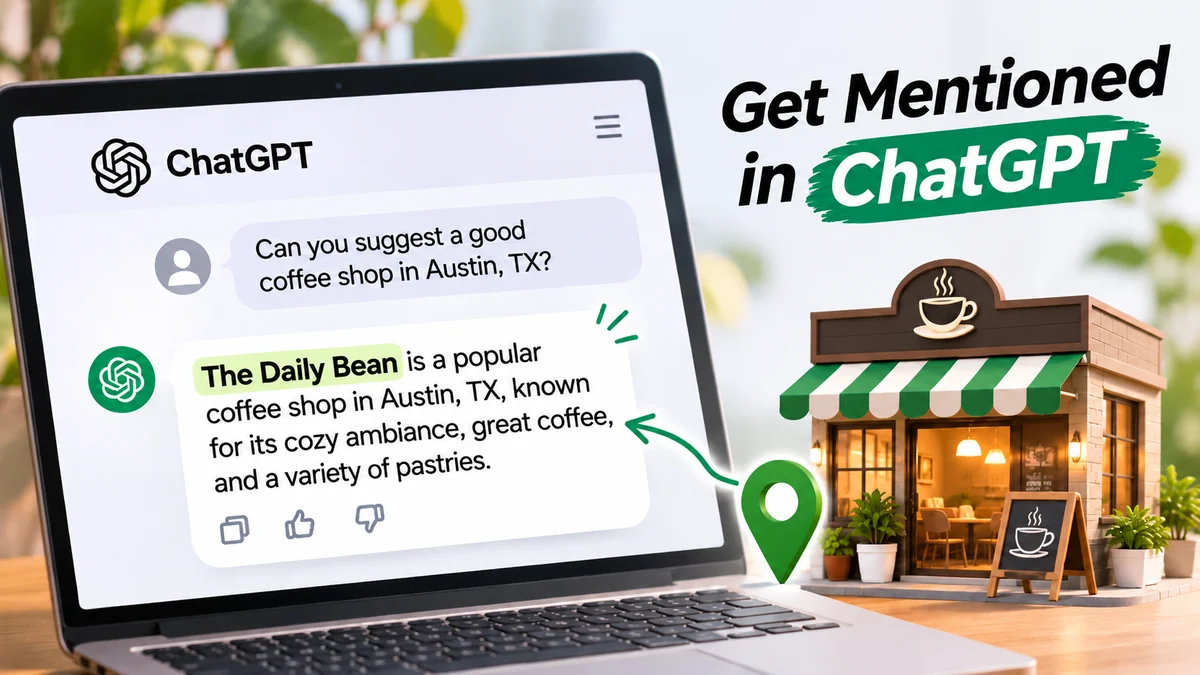
A few years ago, getting found online meant one thing: ranking on Google. Today, many people skip the search results entirely. They ask ChatGPT, Perplexity or Google’s AI summary a question, read the answer and move on. If your business isn’t part of that answer, you’re invisible to them.
That shift has given us a new term, GEO. You may have seen it in marketing emails, often wrapped in a lot of hype. So what is GEO, really, and does a small business need to worry about it? Here’s a plain answer, without the buzzwords.
What GEO means
GEO stands for generative engine optimization. In simple terms, it’s the work of making your content easy for AI tools to find, understand and include in their answers.
These tools are called “generative” because they generate a fresh answer for each question instead of showing a list of links. ChatGPT, Perplexity, Microsoft Copilot and Google’s AI Overviews all work this way.
The term itself comes from a 2023 research paper by a group of university researchers. They tested how different changes to a web page affected whether AI tools used it in their answers. Since then, the name has spread quickly through the marketing world.
GEO vs SEO: what’s the difference?
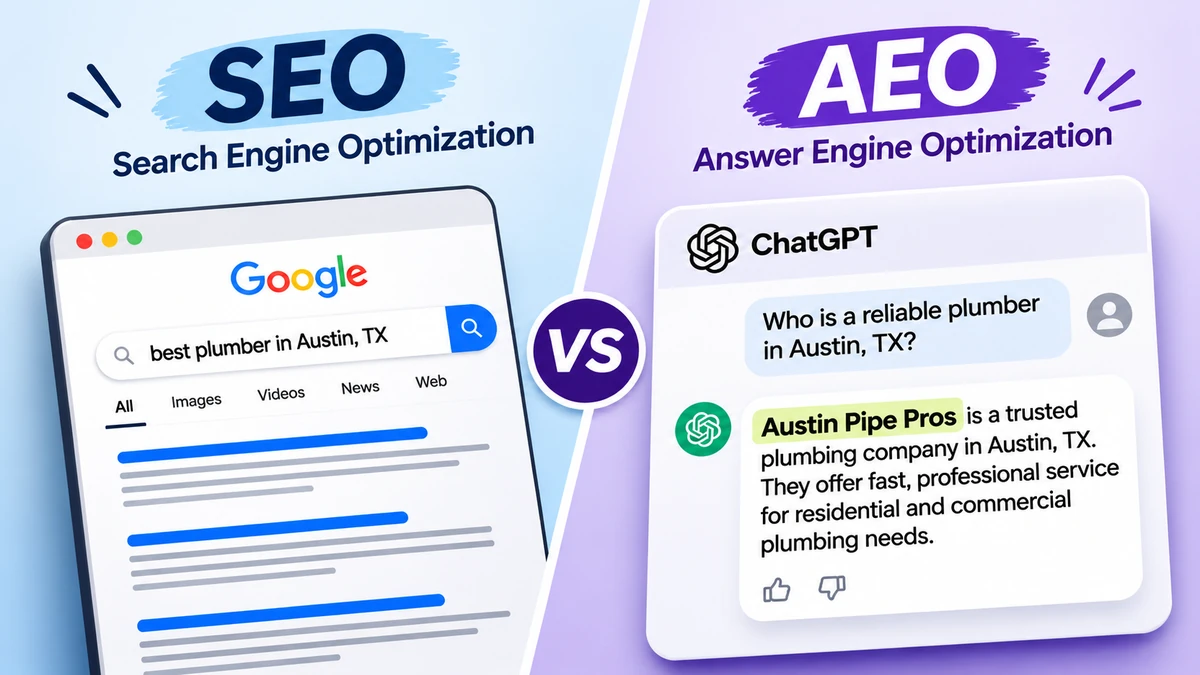
SEO, or search engine optimization, aims to get your page into the list of search results, so people click through to your site. GEO, on the other hand, aims to get your business into the answer itself. In many cases, the person never clicks a link at all.
| SEO | GEO | |
|---|---|---|
| Goal | Rank in search results | Be included in AI answers |
| Where it shows | Google and Bing results | ChatGPT, Perplexity, AI Overviews |
| Success looks like | Clicks and traffic | Mentions, citations and brand searches |
In practice, though, the two overlap a lot. AI tools mostly draw on pages that are already clear, trusted and well structured. In other words, good SEO is the foundation that GEO is built on. If you’d like a longer comparison, read our guide to AEO vs SEO. AEO and GEO are close cousins, and for most businesses the work is the same.
How AI tools decide what to include
Nobody outside these companies knows the exact rules. Still, a few patterns are clear, both from that research and from simply testing the tools.
They like clear, direct answers. A sentence that answers a question on its own is easy to quote. Long, vague introductions are not.
They like specific facts. Numbers, dates, prices, locations and named examples make a page more useful. As a result, those pages tend to be quoted more often.
They trust sources that others trust. Reviews, mentions on other websites and consistent business details all help an AI tool feel confident about you.
They need to be able to read your page. If your key content is hidden in images, buried in scripts or blocked from crawlers, the tools can’t use it.
Simple GEO steps for a small business
You don’t need a special budget for this. Most of it is careful writing and a bit of housekeeping.
1. Answer real questions, early. Think about what customers ask before they buy, such as price, timing, what’s included and who you work with. Then answer each one clearly near the top of the right page.
2. Add a short FAQ to key pages. Keep the questions real and the answers brief. Not only does this help visitors, it also gives AI tools neat, quotable facts.
3. Replace vague claims with facts. “We’re the best plumber in town” tells an AI tool nothing. “We’ve repaired over 2,000 water heaters in Denver since 2015” is something it can repeat.
4. Use structured data. Schema markup is a small piece of code that labels your business details, services and FAQs. On WordPress, SEO plugins like Yoast handle most of it.
5. Keep your details consistent everywhere. Your name, services, location and contact details should match across your website, Google Business Profile, LinkedIn and directories.
6. Get mentioned on other sites. Reviews, directory listings, guest articles and helpful answers in forums all add to the picture AI tools build of your business.
7. Check how you appear. Once a month, ask ChatGPT and Google the questions your customers ask, and note who gets mentioned. Our guide on getting your business mentioned in ChatGPT walks through this in more detail.
What GEO can’t do
It’s worth being honest here, because GEO attracts a lot of big promises.
Nobody can guarantee that ChatGPT will recommend you. These tools change often, and their answers vary from one question to the next. So be wary of anyone selling “guaranteed AI rankings”.
GEO also won’t rescue a weak website. If your pages are thin, slow or unclear, fix those first. Then GEO helps you get more from the good content you already have.
Is GEO worth it for a small business?
For most small businesses, yes, as long as you treat it as part of good SEO rather than a separate project. The steps above make your website clearer for everyone, including people, Google and AI tools. That’s a sensible investment whatever happens with AI search next.
The businesses that will do well are the ones that explain what they do clearly, back it up with real facts and earn genuine trust. After all, that’s what good marketing has always looked like.
FAQ
What does GEO stand for? GEO stands for generative engine optimization. It means making your content easy for AI tools like ChatGPT and Google’s AI Overviews to understand and include in their answers.
Is GEO replacing SEO? No. GEO builds on SEO. AI tools rely heavily on pages that already rank well and are clearly structured, so SEO remains the foundation.
How long does GEO take to work? Clearer pages and FAQs can help within weeks. Building trust through reviews and mentions on other sites usually takes a few months.
Can I check whether AI tools mention my business? Yes. Ask ChatGPT, Perplexity and Google the questions your customers would ask, and note whether you appear. Repeat it monthly to track progress.
Want to know how your site looks to AI tools right now? Run a page through the free SEO audit tool. It includes AI search checks. Or see how my AEO and GEO services can help your business show up in AI answers.