

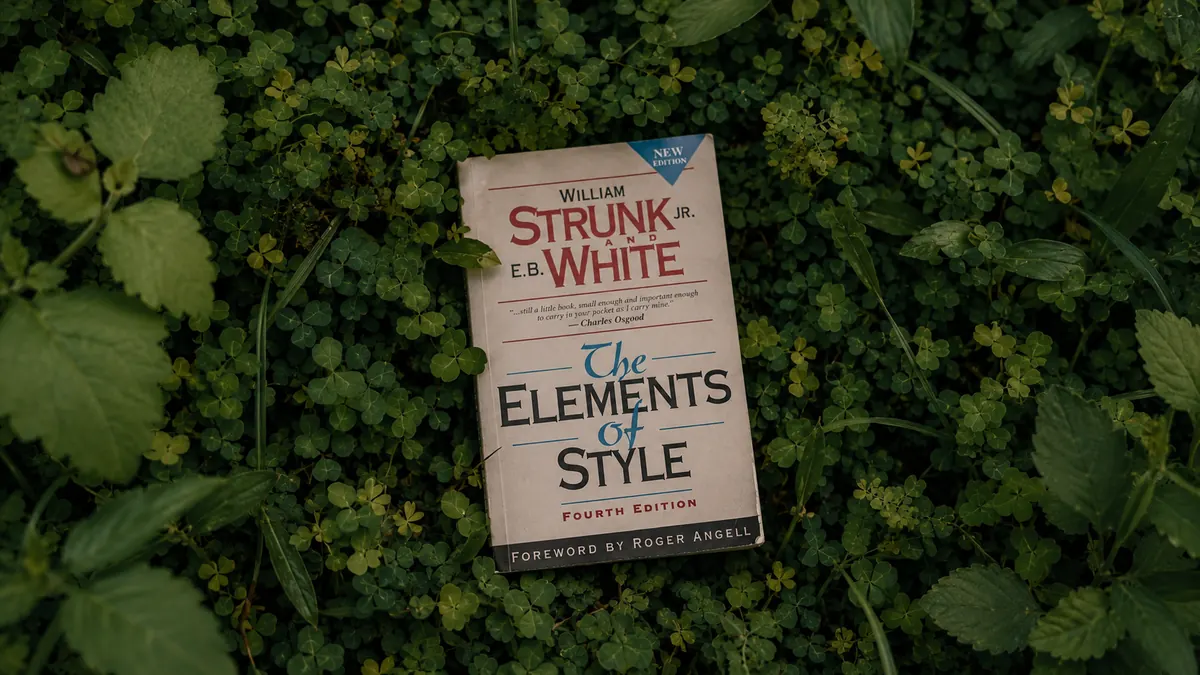
The Elements of Style: What Every Writer Should Know About Clear Writing
- October 09, 2026
- by
- Biswajit Mohanty
A sentence can be grammatically correct and still be difficult to read. It can contain impressive vocabulary without communicating much. It can even sound professional while making a simple idea unnecessarily complicated.
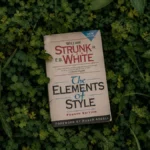
This is the problem The Elements of Style tries to address.
Written originally by William Strunk Jr. and later revised and expanded by E. B. White, this compact handbook has influenced generations of students, journalists, and writers. Rather than offering an elaborate theory of writing, it concentrates on practical matters: grammar, punctuation, sentence construction, word choice, and the habits that make prose clearer.
But does a handbook first published more than a century ago still deserve a place on a modern writer’s bookshelf?
Its advice is useful, particularly when a draft feels wordy or confusing. However, the book is best approached as a guide to making deliberate writing choices, not as a collection of rules that must be followed without exception.
What Is The Elements of Style About?
The Elements of Style is a short guide to writing in English, especially American English. The familiar fourth edition contains sections on elementary rules of usage, principles of composition, matters of form, commonly misused words, and an approach to style. The edition includes William Strunk Jr.’s foundational material and E. B. White’s revisions and writing chapter.
The book is deliberately concise. It does not attempt to explain every grammatical question in exhaustive detail. Instead, it concentrates on common writing problems and offers recommendations for avoiding them.
Several principles stand out:
- Use the active voice when it makes a sentence clearer.
- Express ideas positively when possible.
- Prefer definite, specific, concrete language.
- Remove words that contribute nothing.
- Revise and rewrite instead of treating the first draft as final.
- Develop a style that communicates effectively without drawing unnecessary attention to itself.
These ideas may sound familiar, especially if you have read other books about writing. What makes this handbook distinctive is its directness. It encourages writers to examine individual sentences and make conscious decisions about how they work.
1. Use the Active Voice When It Makes Your Meaning Clearer
One of the book’s best-known principles is its advice to use the active voice.
In an active sentence, the subject performs the action. In a passive sentence, the subject receives the action.
Consider this example:
Passive: The final report was prepared by the research team.
Active: The research team prepared the final report.
The active version is shorter and identifies who performed the work. In many situations, that makes it easier to understand.
However, passive voice is not inherently incorrect. It can be appropriate when the person performing an action is unknown, irrelevant, or less important than the action itself.
For example, “The building was constructed in 1920” is perfectly reasonable when the building’s history matters more than the identity of the builders.
What writers can learn
Do not search your entire article for passive constructions and change every one automatically. Instead, ask whether the sentence makes the action and its responsible party clear.
For a business article, “Our team resolved the issue” may be more informative than “The issue was resolved.” In a scientific explanation, the passive form may sometimes keep the focus on the procedure or result.
The practical lesson is to make a deliberate choice rather than use passive constructions by habit.
2. Put Statements in Positive Form
Another principle in the book encourages writers to express statements in positive form.
This is not a command to make every sentence cheerful. It is about avoiding unnecessary negative constructions when a direct statement would communicate the idea more clearly.
Compare these examples:
Less direct: The software is not difficult to use.
More direct: The software is easy to use.
The second sentence gives readers a clearer description of the product.
But the difference depends on the meaning. “The software is not difficult to use” may be appropriate if the writer wants to suggest that the software is manageable without claiming that it is especially easy.
What writers can learn
Look for sentences that describe an idea only by denying its opposite. Ask whether a direct statement would be more precise.
At the same time, preserve meaningful qualifications. “The method is not always reliable” communicates a limitation that should not be replaced with an unjustifiably positive claim.
Clear writing is not about making everything sound better. It is about stating what you mean accurately.
3. Choose Specific, Concrete Words
Vague language forces readers to guess what the writer means. Specific language gives them something they can understand, imagine, or evaluate.
Consider these examples:
Vague: The company experienced significant improvements.
Specific: The company reduced its average delivery time from four days to two.
The first sentence makes a broad claim without explaining what changed. The second provides a measurable result.
Of course, the second example is useful only if the figures are accurate and supported. Specificity should come from evidence, not invented details.
This principle is particularly valuable for content writers. Articles about software, business, productivity, and technology often rely on general phrases such as “improves efficiency,” “delivers better results,” or “offers a seamless experience.”
Those expressions may be appropriate in some contexts, but they become weak when they replace an explanation of what actually happens.
What writers can learn
When you write a broad claim, ask yourself three questions:
- What exactly changed?
- How does the change affect the reader?
- Can I demonstrate it with an example, observation, or reliable figure?
For instance, instead of writing that a password manager makes account management easier, explain that it can generate unique passwords and store them so users do not have to remember each one.
The explanation gives readers a reason to understand the benefit rather than asking them to accept a vague promise.
4. Omit Needless Words
Perhaps the most widely recognized lesson associated with The Elements of Style is its emphasis on eliminating unnecessary words.
Writers often add phrases that sound formal but contribute little to the meaning. Others repeat information because they want to emphasize a point. Some use several words where one would be sufficient.
Consider this sentence:
Before: It is important to note that users have the ability to change their account settings at any point in time.
After: Users can change their account settings at any time.
The revised sentence communicates the same basic idea with less effort.
This is especially relevant to online writing, where readers may be trying to find a specific answer. Long introductions, repeated explanations, and padded transitions can make useful information harder to locate.
What writers can learn
During editing, look for phrases such as:
- At this point in time
- In order to
- Due to the fact that
- It is important to note that
- Has the ability to
These phrases are not always wrong, but they often have simpler alternatives.
Read the sentence after removing the phrase. If the meaning remains accurate and complete, you probably did not need those extra words.
The goal is not to make every sentence as short as possible. Some ideas need explanation, context, or carefully chosen qualifications. Cut clutter, not meaning.
5. Treat Revision as a Necessary Part of Writing
A first draft captures your initial attempt to express an idea. It may contain useful observations alongside repetition, weak transitions, and sentences that do not quite say what you intended.
The book’s approach to style emphasizes revision and rewriting. This matters because good writing is not simply the result of choosing the right words on the first attempt. Writers often discover the clearest way to explain an idea while examining what they have already written.
Suppose you are drafting an article about choosing a web hosting service. Your first version might include every feature you researched: storage, bandwidth, server locations, support, security, backups, and pricing.
During revision, you may realize that the article needs a clearer structure. Beginners may need to understand reliability and support before comparing technical specifications. Some details may belong in a separate guide.
That is more than proofreading. It is a reconsideration of how the information should work for the reader.
What writers can learn
Separate revision into a few focused tasks:
- Check whether the article answers its central question.
- Rearrange sections that interrupt the flow.
- Remove repeated points and unnecessary explanations.
- Rewrite sentences that sound vague or unnatural.
- Correct grammar, punctuation, and spelling.
This sequence is a practical way to apply the book’s emphasis on revision, not a claim that the authors prescribe these exact steps.
The important point is that proofreading and revision solve different problems. Correct punctuation cannot repair a poorly organized argument.
6. Give Related Ideas a Consistent Structure
The book also discusses parallel construction: expressing related ideas in similar grammatical forms.
Consider this sentence:
Before: The role requires researching topics, writing articles, and the editing of drafts.
After: The role requires researching topics, writing articles, and editing drafts.
The second version presents the three responsibilities in a consistent form. That makes the list easier to follow.
Parallel construction is useful in headings, lists, comparisons, and sentences that contain several related points. It helps readers recognize how ideas connect.
What writers can learn
When presenting a list of benefits, steps, or responsibilities, check whether the items follow a consistent grammatical pattern.
For example:
- Research the topic.
- Organize the information.
- Write the first draft.
- Revise the article.
The repeated verb structure makes the sequence easy to scan.
However, parallel construction should support the meaning rather than become a reason to force every sentence into the same rhythm. Natural variation still has a place in good prose.
7. Develop Style Through Choices, Not Decoration
The book’s discussion of style encourages writers to think about how they use language rather than assuming that style comes from impressive vocabulary.
A sentence does not become better simply because it contains a sophisticated word. Nor does a paragraph become more professional because it is full of formal expressions.
Sometimes a plain sentence is exactly what the reader needs. At other times, a vivid description, a carefully chosen metaphor, or a more complex sentence can express an idea with greater precision.
The challenge is knowing which approach suits the purpose.
For example, a troubleshooting guide should prioritize clarity and sequence. A personal essay may benefit from a more distinctive rhythm and descriptive language. A product comparison needs enough precision to help readers evaluate real differences.
What writers can learn
Pay attention to the relationship between your style and the job the writing needs to do.
Do not replace every ordinary word with a more elaborate one. Do not remove every descriptive detail in the name of concision. And do not assume that all writing should sound identical.
The aim is controlled, purposeful language. Clarity and personality can coexist.
8. Learn the Rules, but Understand Their Limits
One reason The Elements of Style remains useful is its willingness to make direct recommendations. For someone who is unsure how to structure a sentence or edit a paragraph, clear guidance can be more helpful than a long discussion of every possible exception.
However, a prescriptive handbook is not the same thing as a complete description of how English works in every situation.
Language changes. Different publications follow different style guides. British and American English sometimes differ in spelling, punctuation, and usage. Academic writing, journalism, fiction, and conversational writing also have different needs.
A rule that improves one sentence may make another less natural. A passive construction may be appropriate. A sentence fragment may be effective in a particular context. Repetition may be necessary for emphasis or comprehension.
This does not make the book useless. It means readers should understand the purpose behind a recommendation instead of applying it mechanically.
What writers can learn
When a writing rule seems relevant, ask what problem it is trying to solve.
Does it reduce ambiguity? Improve rhythm? Prevent a grammatical error? Remove unnecessary repetition? If you understand the reason behind the rule, you can judge when it helps and when a different choice would serve the reader better.
For professional content, also follow the publication’s established style guide when one exists. Consistency across a website or publication may matter more than an individual preference.
Is The Elements of Style Still Useful for Bloggers and Content Writers?
Yes, particularly as a reference for sentence-level editing.
The book is useful when you want to improve word choice, eliminate clutter, check grammatical construction, or make a paragraph more direct. Its compact format also makes it convenient to revisit while working on an article.
For bloggers, the principles can help prevent common problems: introductions that take too long to reach the point, vague claims, repetitive paragraphs, and sentences that sound formal without becoming more informative.
But the book does not cover everything a modern content writer needs.
It is not a complete guide to keyword research, search intent, information architecture, audience research, analytics, or content distribution. Writers working on those areas will need additional resources.
The book also cannot decide whether an article answers the right question, whether its research is trustworthy, or whether its advice is genuinely useful. Those decisions require subject knowledge, research, and an understanding of the audience.
A well-edited sentence is valuable. A well-edited sentence that communicates the wrong information is still a problem.
Who Should Read The Elements of Style?
The book is worth considering for:
- Beginning writers who want a compact introduction to common writing principles.
- Bloggers and content writers who need to make explanations clearer and more concise.
- Students who want a practical reference for grammar, usage, and composition.
- Experienced writers who want a reminder of basic principles and a fresh reason to examine their habits.
It may be less satisfying for readers seeking an extensive modern grammar reference or a comprehensive guide to digital publishing. Its concise, rule-based approach is part of its appeal, but it also limits the depth of its treatment of individual topics.
Final Verdict: A Small Book With Useful Lessons
The Elements of Style is valuable because it directs attention toward the small decisions that shape a piece of writing. A sentence can become clearer when its subject is easier to identify. A paragraph can become stronger when vague claims are replaced with concrete explanations. An article can become more useful when unnecessary material is removed.
These improvements are not glamorous, but they matter.
The book is best read as a practical handbook rather than a universal law of writing. Some recommendations will be immediately useful; others require judgment and adaptation to the audience, genre, and purpose.
If you write regularly, keep its central questions close at hand:
Does this sentence say what I mean? Is the wording precise? Have I included anything the reader does not need? Would a different structure make the idea easier to understand?
You do not need to follow every rule blindly to benefit from the book. You need to understand what good writing is trying to accomplish—and make choices that help your readers get there.