

On Writing Well by William Zinsser: What Writers Can Learn About Clear Writing
- October 09, 2026
- by
- Biswajit Mohanty
Writing well is not simply about choosing better words. It is about knowing what you want to say, deciding what matters, and helping another person understand your thoughts without unnecessary effort.
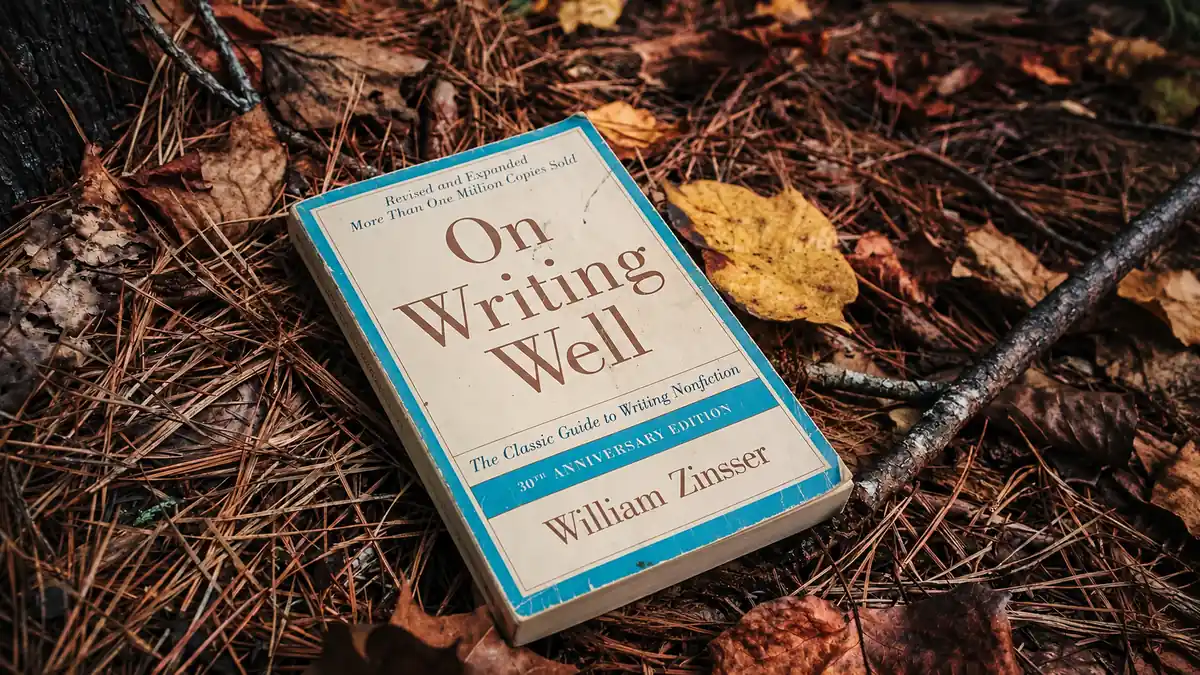
That is the central concern of On Writing Well: The Classic Guide to Writing Nonfiction by William Zinsser. First published in 1976, the book has remained a widely used guide for people who write about real people, places, events, experiences, and ideas.
Zinsser approaches writing as a craft rather than a mysterious talent. He discusses simplicity, clutter, style, audience, structure, and the attitudes that help writers keep working. His advice is especially relevant to nonfiction writers, journalists, bloggers, and anyone who needs to communicate clearly.
But what makes this book worth reading today? And which of its lessons can writers put into practice rather than simply underline and forget?
What Is On Writing Well About?
William Zinsser’s On Writing Well is a practical guide to nonfiction writing. Instead of treating good writing as a collection of complicated techniques, Zinsser concentrates on the decisions that make prose clear, engaging, and readable.
The book is divided into four broad parts: principles, methods, forms, and attitudes.
The first part explores the foundations of writing, including simplicity, clutter, style, audience, words, and usage. The second discusses unity, beginnings, endings, and practical language choices. The third examines different forms of nonfiction, from memoir and travel writing to science, business, sports, criticism, and humor. The final part considers voice, confidence, enjoyment, and the decisions writers make while working.
This structure makes the book more than a collection of editing rules. It considers both the writing itself and the person doing the writing.
-
Clear Writing Begins With Clear Thinking
One of Zinsser’s central concerns is the connection between thought and language. When writers are uncertain about what they mean, their sentences can become unnecessarily complicated. Extra words and vague expressions sometimes hide a thought that has not been properly worked out.
Consider these two sentences:
Before: The primary objective of this initiative is to facilitate an improvement in the overall quality of communication.
After: This initiative aims to improve communication.
The second version communicates the main idea directly. It does not ask readers to work through several layers of formal language before reaching the point.
The lesson is not that every sentence must be short. Some ideas need space and explanation. The real question is whether each word helps express the thought.
How to apply this lesson
Before editing an article, explain its main argument in one or two plain sentences. If you struggle to do that, you may need to clarify your thinking before polishing the prose.
Once the central idea is clear, examine each paragraph. Does it explain, support, illustrate, or develop that idea? If it does none of these things, reconsider its purpose.
Clear writing is easier to achieve when the writer knows exactly what the reader should understand.
-
Remove Clutter Without Removing Meaning
Zinsser gives considerable attention to clutter: unnecessary words, inflated expressions, circular constructions, and jargon that make writing harder to read.
This is one of the book’s most practical lessons because clutter often enters a draft unnoticed. Writers may add formal phrases because they sound professional, repeat information because they want to emphasize it, or use longer words when shorter ones would communicate the same meaning.
For example:
Before: At this point in time, we are currently in the process of reviewing the document.
After: We are reviewing the document.
The first sentence contains several expressions that add little or nothing. Removing them makes the sentence cleaner without changing its meaning.
However, cutting words should not become a mechanical exercise. A sentence may need detail, context, or a qualification to remain accurate. Concision is useful when it improves communication, not when it removes information readers need.
How to apply this lesson
During editing, look for phrases such as:
- In order to
- At this point in time
- Due to the fact that
- It is important to note that
- In the event that
These phrases are not always wrong, but they often have simpler alternatives.
Try deleting a phrase and reading the sentence again. If the meaning remains intact, the words may not have been necessary.
For bloggers and content writers, this matters because readers should not have to navigate padding before reaching useful information.
-
Develop Your Own Style Instead of Imitating Someone Else
Writing advice often encourages people to follow a particular style, imitate successful writers, or use a prescribed formula. Zinsser’s discussion of style points toward a more personal approach: good writing should communicate clearly while retaining the writer’s individuality.
Simplicity does not mean every writer should sound the same. Two people can explain the same subject with different rhythms, examples, levels of formality, and personalities.
A technology blogger might prefer direct explanations and practical examples. A personal essayist might use reflection and storytelling. A journalist covering a complicated subject might need a more restrained voice.
The goal is not to eliminate personality in the name of clarity. It is to make the writing understandable without making it lifeless.
How to apply this lesson
When editing, distinguish between habits that weaken your writing and choices that make your voice distinctive.
Repeated filler phrases, confusing sentences, and unnecessary jargon may need attention. A conversational tone, a dry sense of humor, or a particular way of explaining an idea may be worth keeping.
Read your draft aloud. If a sentence feels unnatural, ask whether it is unclear or whether you are trying too hard to sound like someone else.
You can learn from other writers without turning your own writing into an imitation of theirs.
-
Remember That Writing Is a Transaction With the Reader
Zinsser’s opening chapter, “The Transaction,” establishes an important relationship between the writer and the reader. Writing is not merely the act of putting thoughts on a page. It is an attempt to communicate something to another person.
This changes the way we evaluate a piece of writing.
A writer may enjoy a clever sentence, but if that sentence confuses the reader, it has not served its purpose. A detailed explanation may demonstrate how much the writer knows, but it may still fail if readers cannot identify the information they came for.
Thinking about the reader does not mean trying to please everyone. It means understanding the purpose of the piece and respecting the attention readers give it.
How to apply this lesson
Before writing, ask yourself three questions:
- Who is likely to read this?
- What do they need to understand or accomplish?
- What background information can I reasonably expect them to have?
For a beginner’s guide to website hosting, for example, you cannot assume every reader understands DNS, server resources, or caching. You may need to explain those terms or introduce them through an example.
For an article aimed at experienced developers, explaining every basic term would slow the reader down.
Good writing begins with the subject, but it also considers the person trying to understand it.
-
Give Your Article Unity and a Clear Direction
Zinsser discusses unity in the book’s section on writing methods. The idea is that a piece of writing needs a coherent focus. Its parts should work together rather than compete for attention.
This is particularly useful for blog articles, where writers can easily add too many related points. An article about choosing a writing tool might gradually become a discussion of productivity, pricing, artificial intelligence, website design, and the future of publishing.
These subjects may be connected, but including all of them can weaken the article’s main purpose.
Unity does not require an article to be narrow or simplistic. It requires the writer to make deliberate decisions about what belongs.
How to apply this lesson
Write down the main promise of your article before drafting it.
For example: “This article will help freelance writers evaluate whether a client is worth accepting.”
Whenever you consider adding a section, ask whether it helps readers make that decision. If it does, keep it. If it introduces a separate subject that deserves its own explanation, consider writing a separate article and linking to it.
A clear focus helps readers understand the article’s direction and helps writers avoid unnecessary detours.
-
Pay Attention to the Beginning and the Ending
Zinsser devotes a chapter to the lead and the ending. These are important parts of a nonfiction piece because they shape the reader’s first impression and determine how the discussion concludes.
A weak introduction may take too long to reach the subject. A weak ending may repeat everything the article has already explained or stop without giving the piece a satisfying conclusion.
Neither problem is solved simply by adding a dramatic opening or a memorable final sentence. The beginning needs to establish a reason to continue reading, while the ending should feel appropriate to the material that came before it.
How to apply this lesson
For a practical article, begin with a real problem, a useful observation, a specific question, or a situation readers recognize.
Avoid opening with several general statements that could introduce almost any article in the same category.
For the ending, return to the main idea without repeating every section. You might offer a practical next step, explain the broader significance of the discussion, or leave the reader with a conclusion that follows naturally from the argument.
The introduction and conclusion should feel like parts of the same piece, not separate elements added to satisfy a writing formula.
-
Treat Revision as Part of Writing, Not a Final Correction
A first draft is not necessarily a finished article. It is an opportunity to discover what you want to say and how the ideas might fit together.
Zinsser’s emphasis on simplicity, clutter, unity, and language choices makes revision central to the writing process. Improving a piece involves more than correcting spelling and punctuation. It may require removing a paragraph, changing the order of ideas, rewriting an opening, or explaining a point more clearly.
This distinction matters because a grammatically correct article can still be confusing, repetitive, or poorly organized.
How to apply this lesson
Try revising in separate passes rather than correcting everything at once.
First pass: Meaning. Is the main point clear? Have you answered the question the article promises to address?
Second pass: Structure. Do the sections follow a logical order? Are any important steps missing?
Third pass: Clutter. Can you remove unnecessary phrases, repetitions, and vague expressions?
Fourth pass: Readability. Are the examples understandable? Are technical terms explained? Do the transitions help the reader follow the argument?
Fifth pass: Mechanics. Check spelling, punctuation, grammar, and formatting.
This is a practical application of the book’s principles rather than a claim that Zinsser prescribes this exact five-pass method. The benefit is that revision becomes a deliberate process instead of a vague instruction to “make it better.”
-
Learn the Craft, but Do Not Lose the Enjoyment
The final part of On Writing Well moves beyond sentence construction. Its chapters address the sound of a writer’s voice, enjoyment, fear and confidence, the pressure of the finished product, and the decisions writers make.
This is an important part of the book’s broader perspective. Writing involves technique, but it also involves judgment, persistence, and the willingness to keep working through uncertainty.
Writers can become so concerned about producing something impressive that they lose sight of what interested them in the subject. They may overwork sentences, imitate a fashionable style, or become discouraged when a draft does not immediately match the version they imagined.
Zinsser’s attention to enjoyment and confidence provides a counterweight to the book’s practical advice about editing. The point is not simply to produce clean sentences. It is to develop a sustainable relationship with the work.
How to apply this lesson
When a draft feels difficult, separate the act of creating from the act of evaluating.
Give yourself room to get the ideas down before judging every sentence. Return later to improve the structure and language. If a piece is not working, investigate what is wrong rather than assuming that you are incapable of writing it.
Confidence does not require believing that every draft will be good. It can come from knowing that writing is a process and that you can make informed decisions about how to improve your work.
What Makes On Writing Well Useful for Modern Writers?
Although the book predates today’s blogging platforms, social media, and generative AI tools, much of its central advice remains applicable. Readers still need clear explanations. Unnecessary jargon can still obscure meaning. Writers still need to organize ideas, choose words carefully, and revise their work.
For content writers and bloggers, the book offers a useful counterbalance to the temptation to focus entirely on search rankings, templates, word counts, and publishing frequency.
Those things may support a publishing strategy, but they cannot replace clear thinking or a well-developed explanation.
A search-friendly article can still disappoint readers if it repeats familiar information without answering the question properly. A long article can still feel incomplete if its sections lack direction. A polished paragraph can still sound artificial if the writer has sacrificed a natural voice to imitate a formula.
Zinsser’s principles encourage writers to return to the fundamentals: know what you mean, understand your reader, remove what gets in the way, and make deliberate choices about how the piece should work.
Is On Writing Well Worth Reading?
On Writing Well is worth considering if you write nonfiction and want to strengthen your command of clarity, style, structure, and revision. It is particularly relevant to journalists, bloggers, content writers, memoirists, and professionals who need to explain ideas to other people.
Its value lies in the range of subjects it covers. The early chapters address broad principles of language and style, while later chapters explore particular forms of nonfiction. The final section considers the writer’s attitude toward the work itself.
The book is not a complete guide to every part of modern content publishing. It does not replace research into search intent, analytics, content distribution, or the technical side of running a website. Writers who need those skills will need additional resources.
But that is not its main purpose. Its contribution is more fundamental: helping writers think carefully about what they want to communicate and make their prose serve that purpose.
Final Thoughts
The most useful way to approach On Writing Well is not to treat it as a set of rules to memorize. It is to use its ideas as questions you can bring to your own work.
Is this sentence saying what I mean? Does this paragraph belong here? Am I helping the reader understand the subject, or making the explanation harder than it needs to be? Have I preserved my own voice while improving the clarity of the writing?
These questions are useful because they apply to the work in front of you, whether you are writing a blog post, a report, a personal essay, or a longer piece of nonfiction.
Writing improves through a combination of thought, practice, judgment, and revision. Zinsser’s book offers a framework for approaching that work with greater care.
You do not need to make every sentence sound impressive. You need to make every sentence earn its place.